July 2021
An update: education during the pandemic
Summer is here. The restrictions are easing in many countries but, at the same time, the full impact of the pandemic on education around the world is coming more and more into focus… and the news is not good.
188 countries imposed countrywide school closures during the pandemic, affecting more than 1.6 billion children and youth.
Data from UNICEF show that schools for more than 168 million children across the globe closed their doors for almost an entire year due to COVID-19 lockdowns. Furthermore, around 214 million children globally – or 1 in 7 – missed more than three-quarters of in-person learning between March 2020 and February 2021.

© UNICEF/UN0423792/Chris Farber/UNICEF via Getty Images
Almost one-third of the world’s learners – 463 million students from pre-primary to upper secondary schools – cannot be reached by remote learning strategies: digital or broadcast programming. 83% of countries used online platforms to deliver education programming during school closures. However, children from the poorest households or living in rural areas do not have access to the Internet, so three-quarters of the student population had no learning program to replace their in-person schooling.
We know the pandemic has disproportionally impacted girls. According to UNICEF, it has severely disrupted their daily lives: their physical and mental health, their education, and the economic circumstances of their families and communities. In particular, the combination of school closures, economic stress on the family, adolescent pregnancy and parental deaths due to COVID-19 are putting the most vulnerable at increased risk of child marriage. It is estimated that 11 million girls may never go back to the classroom following the pandemic.
There is a pressing need to reimagine girls’ education and provide supplemental learning opportunities that will improve learning outcomes for girls. With this in mind, 60 million girls reached out to our partners over the last six months and asked them to submit their best, most innovative education projects to support adolescent girls.
Three projects were chosen:
CAUSE Canada: We Day Kam Back (We Go Back) – Sierra Leone
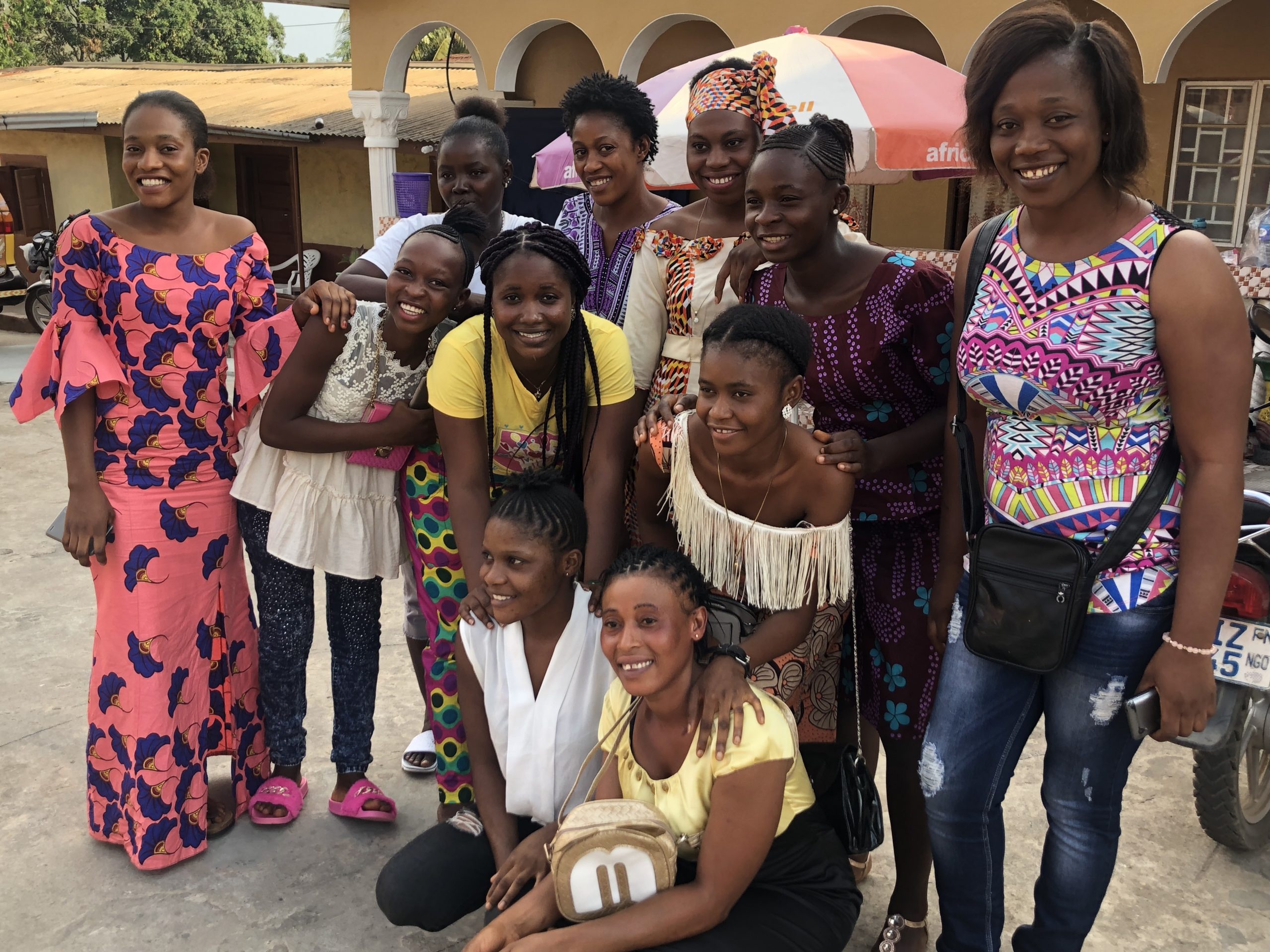
Photo: CAUSE Canada
The COVID-19 pandemic, like the 2014 Ebola crisis, has jeopardized girls’ education. Schools in Sierra Leone were closed between March and October 2020, increasing the risk of child marriage and child labour, both of which greatly decrease the likelihood of girls returning to school after the pandemic. Furthermore, although the government implemented distance education through radio programs, we know that, during the 2014 Ebola outbreak, only 30% of children participated in home learning and many girls never returned to school since they were busy with household and income-generating activities and failed to keep up with the curricula.
In this $100,000 project, 640 out-of-school adolescent girls, aged 12-16 years, will participate in the 30 accelerated learning centres located in the rural communities of Koinadugu and Falaba. CAUSE’s girl-centered holistic approach will incorporate the Mobile Learning Lab for offline learning and the participation of local Mother’s Clubs will provide ongoing support to the girls. This project aims to target the many challenges adolescent girls face to help them return to school.
Right To Play: Leave No Girl Behind – displaced persons’ camps, Uganda

Photo: Right To Play
In Uganda, Right To Play will use 60 million girls’ $100,000 funding to support the creation of girls’ clubs that will provide tablets to girls in eight secondary schools reaching 2,178 refugee and host community girls. Digital play-based learning resources on selected curriculum topics as well as content on gender-based violence and sexual and reproductive health rights of girls in Uganda will be preloaded on the tablets to provide offline access. Additional open-source materials to improve learning, develop life skills and gain knowledge will be included.
The project will also develop a digital play-based interactive session on making reusable sanitary pads, which will be uploaded on the tablets. Each girl will also be provided materials sufficient to make at least two reusable pads. Every girls’ club will ensure that all the girls will have access to this valuable technology in a safe and inclusive space.
Stephen Lewis Foundation: Facilitating meaningful education for girls – Zambia

Photo: Twavwane
In Zambia, schools are a lifeline that go beyond academic instruction and COVID-19 is threatening decades of progress made towards HIV and AIDS and gender equality. In a country where schools were closed for ten months, the impact of this investment in education cannot be overstated.
60 million girls’ $50,000 investment will enable its local partner, Twavwane, to expand and make vital improvements to its school, which is currently attended by 625 orphans and vulnerable children and youth. This support will also address key barriers to school attendance for 50 adolescent girls at risk of having to leave school, including supporting the costs of school fees, uniforms, and menstrual products, as well as educational support for 20 adolescent boys.
The central component of this project is the construction of an additional classroom block that will contain a strong room, an examination centre and a computer and science laboratory. This new addition will allow Twavwane to improve the math, science, and computer literacy training for its grade 9 students. Increased access to STEM (science, technology, engineering, mathematics) and related skills means that girls are better equipped to complete secondary school and pursue university or vocational training.
The in-house examination centre will significantly decrease the barriers to writing examinations that students face and lower the costs that the organization incurs for transporting students to examination centres. The additional space is also needed at this time in order to safely accommodate students in school while maintaining public health measures such as physical distancing.
This is 60 million girls’ 15th year supporting girls’ education in the developing world. We are proud to play our part in bringing creative ideas to communities so that the most vulnerable adolescent girls have a chance to continue attending school.
With less than 1% administrative costs due to our all-volunteer structure, we have invested over $3.6 million in 32 projects in 21 countries since 2006 supporting over 60,000 children to have access to a quality education.
It is through your generosity that we can continue to ensure girls and boys get the education to which they have a right by working with our amazing partners, following the latest research and information on what works best in the field, and ensuring we use the most innovative strategies for the greatest possible impact.
Thank you so much!
Wanda Bedard
President
60 million girls Foundation

Take a look where we’ve “travelled” so far…
We have invested $3.7 million in 32 projects in over 20 countries supporting more than 60,000 children. We are stopping at each of 60 million girls’ projects along our trek around the world. Join us on our journey as we remember the amazing projects we have funded over the past 15 years.
Learn more about our projects and partners in Central and East Africa in:
Anne: Chasing a dream, chasing a Boston Qualifier!

Anne, who is taking part in our 60 million step Challenge, tells us about her journey to participate in the Boston Marathon:
I have been running for just over thirty years. When I began, with some ordinary running shoes and no watch to keep track of my time or distance, the idea of running a marathon seemed like a superhuman concept.
To read more, click here.