Notes From Tanzania: The Impact of the Lesley H. Stewart Scholarship Fund
By Wanda Bedard, 60 million girls Foundation President and Founder
Their names are Moinan, Namayani, Neema, Papei, Rachel, and Regina.
They share similar stories. Born in a rural, large pastoral Maasai family with 6, 7 even 10 brothers and sisters. Possibly able to attend some sort of primary school without too much opposition despite daily chores like walking an hour and a half to scoop up water from the local stream or river for drinking then carrying 20-liter containers back for another hour and a half (for reference, 20 liters of water is similar to carrying four, one-gallon cans of paint).
Girls also help with domestic chores from before sunrise to prepare a fire for cooking a morning meal for the family. Fetching branches for firewood and watching out for the younger siblings throughout the day.
But then comes adolescence and the still too deeply held belief that a high school education is of little value for the family sacrifices that must be made, especially for girls. The costs to a family can be high: school tuition; boarding costs at school or with a family member living in a larger village or city where a high school can be found; the loss of the domestic help a girl provides to her mother; the attraction of receiving a dowry when a girl is married off, plus the fact that there would then be fewer mouths to feed in the household. The societal norm of having many children – and wives – confers high priority and status on the male head of household in this still polygamist society, making it difficult to ensure that each child has a chance to get an education.
For the six young women who received a four-year bursary from the Lesley H. Stewart Scholarship Fund, the chance to go to a MWEDO high school is life changing!
Ndinini Kimasera Sikar, co-founder of the Maasai Women Economic Development Organization (MWEDO), has a story very close to these girls’ reality. It took her three years after finishing primary school to convince her father and the community that she should be allowed to continue to high school. Her father worried about her safety in a town far from her home and feared her loss of their culture and traditions, but support from other outside Maasai community members who believed in Ndinini’s dream of continuing to study, eventually leading to an intervention by school commissioners to allow her to leave. Ndinini recounts that the pull and forceful resistance of her father and community was almost impossible to bear because she continued to highly value her parents, extended family and community. Yet support along the way gave her the strength to continue and complete a university degree, start her career in corporate finance and achieve success during her decade in the sector.
Despite her successes, Ndinini felt something was missing. She wanted to give back to the community that had supported her journey and so she started MWEDO with two other Maasai women. In the 26 years since the organization was founded over 2000 girls have had access to high school as well as mentoring, healthcare, and guidance. Many have chosen to continue studying beyond high school.
The six recipients of the Lesley H. Stewart Scholarship Fund bursaries are a testament to the impact of the helping hand which can transform a girl’s life with education and support. These young women are vibrant, and like their fellow students, on the cusp of graduating with dreams of further education in medical school, the sciences, business, engineering, and law. They carry on their Maasai culture through dance and singing and a continual discussion on what it means to be Maasai. They speak in front of the whole school of over 200 students to share their stories with assurance, confidence and an undeniable desire to move their lives forward, have an impact in society and very clearly demand that MWEDO continue so that other girls like them get the same opportunity in their lives. Some past graduates have returned to work at MWEDO as teachers themselves.
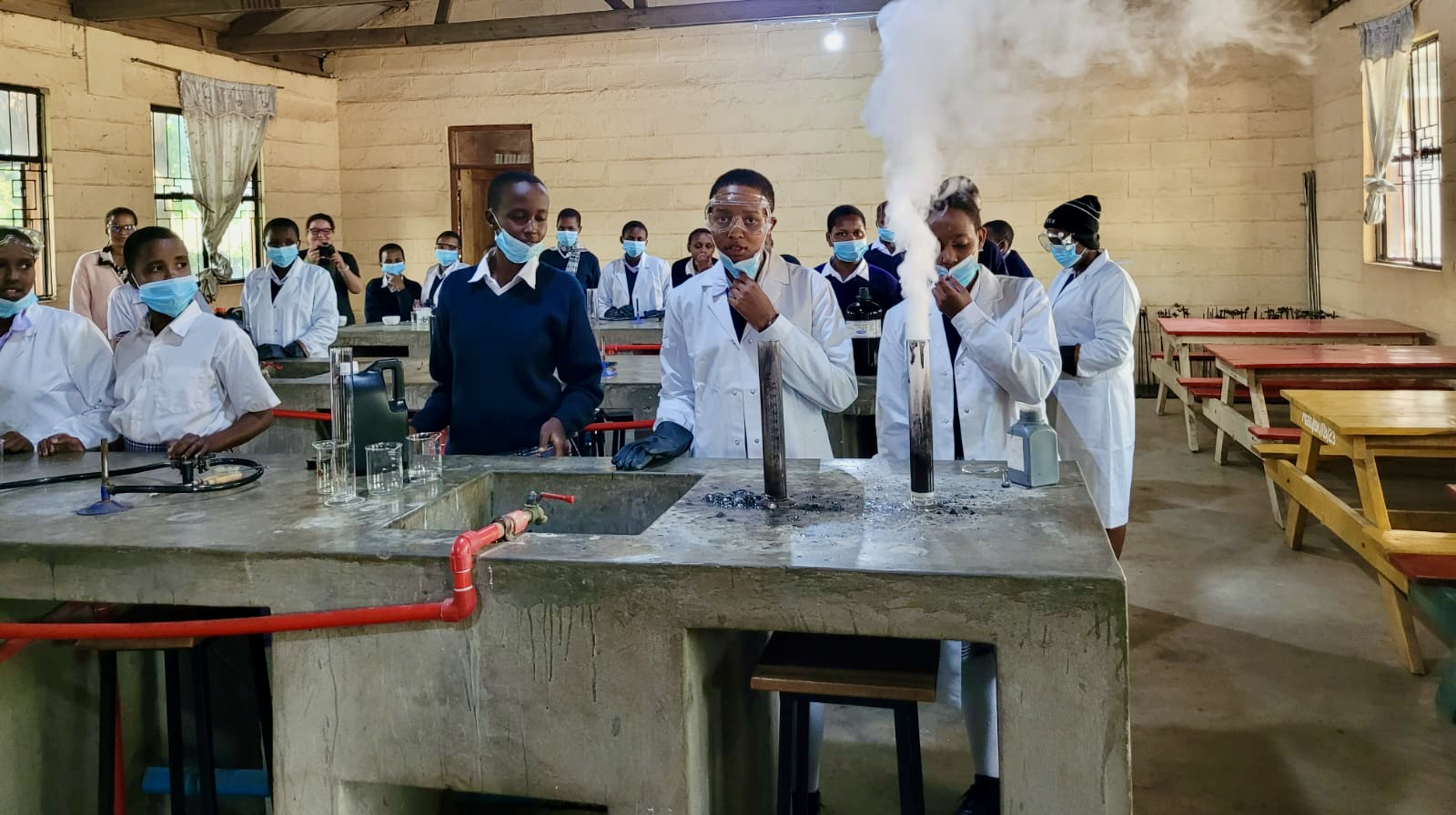
It was an honour for us to have this amazing opportunity to meet Ndinini once again and to get to know the staff, teachers and girls in person. We exchanged stories, asked questions, played basketball (!), and visited the science lab where so many experiments were set up for us to see. We also participated in a demonstration of their computer lab.
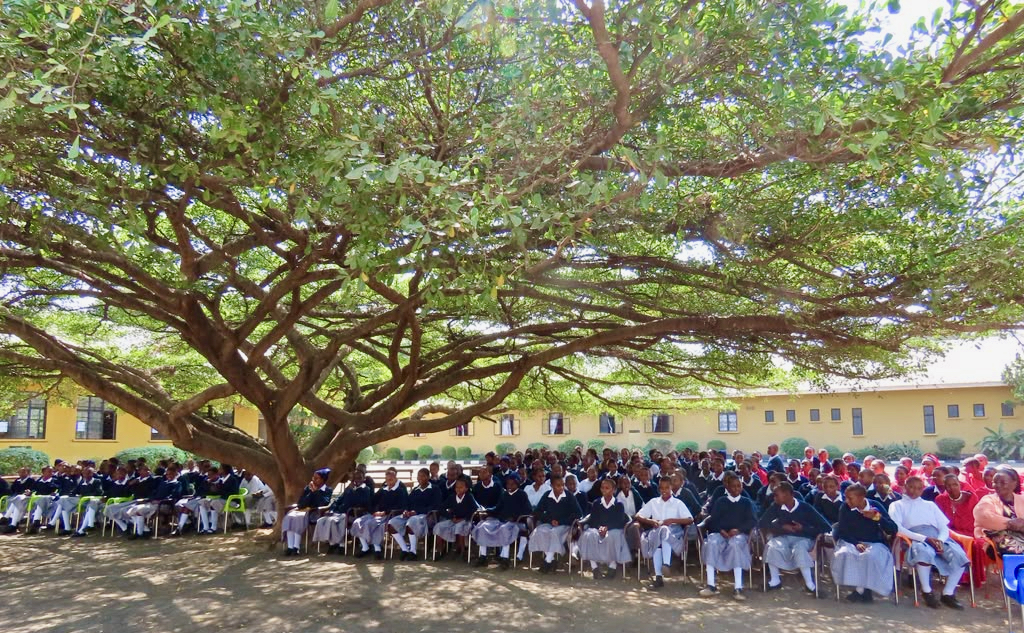
I took this opportunity to read a deeply touching letter we brought from Lesley’s husband Abe, and her daughter Sarah in Montreal, to the six girls standing beside me and to the whole school gathered under the immense terminalia tree. Under the wide and protective branches spread horizontally over at least 40 feet providing shade from the strong sun, we gathered that afternoon in the centre courtyard of the school, and I shared Abe’s heartfelt words. He wrote about the impact of the bursaries and the deep meaning embedded in this gesture of love towards Lesley. I was then able to give these wonderful young women a hug.
We were touched by the outpouring of thanks by the MWEDO community at every turn for what 60 million girls does and what it represents. With the help of our partner, the Stephen Lewis Foundation, a longtime supporter of MWEDO, we left immensely grateful for the chance to be the helping hand for these girls at the time they really needed it.
Girls’ education was so important to Lesley. I like to think she would have loved to see the accomplishments of these young women.