Making the Whole World Possible
| This blog post is part of “20 Years, 20 Stories,” a series celebrating the 20th anniversary of the 60 million girls Foundation. Over the next eight months, we will share the stories of the people who have shaped our journey — volunteers, partners, donors, and the girls at the heart of our mission. We hope their voices inspire you as much as they inspire us. |
A Vision That Travels Dirt Roads
There is a particular kind of determination required to drive hours along impassable roads in rural Sierra Leone, hauling technology into villages where the electricity flickers and the internet doesn’t reach — and to do it not once, but again and again, because you believe, without reservation, that the children at the end of that road deserve the same education as anyone else on the planet.
That determination has a name: Samuel Momoh.
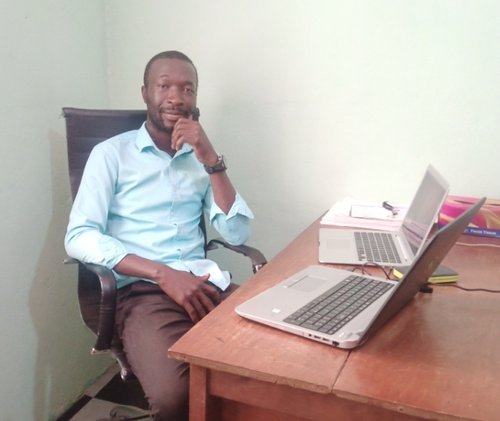
Samuel Momoh, Country Director of World Possible in Sierra Leone
As Country Director of World Possible in Sierra Leone, Samuel has spent years working at the intersection of technology, community, and girls’ education. World Possible is a nonprofit founded in 2008 that builds portable, solar-powered Wi-Fi servers called RACHEL — Remote Area Community Hotspot for Education and Learning — that deliver free educational content to places with no internet connection. In the hands of someone like Samuel, RACHEL isn’t just a device. It’s a gateway.
His partnership with the 60 million girls Foundation began through CAUSE Canada, the international development organization that has been collaborating with 60 million girls since 2011 to bring quality education to some of Sierra Leone’s most underserved communities. Samuel served as an E-learning Coordinator with CAUSE Canada, where he was responsible for implementing the Mobile Learning Lab (MLL) project — a program that brought offline digital learning into classrooms that had never seen it before.
When learning came alive
The communities Samuel worked in faced formidable barriers. Electricity was unreliable. Internet access was nearly nonexistent. Basic learning materials were hard to come by. And yet, when the RACHEL platform arrived in those classrooms, something shifted.
“Children who had never touched a computer suddenly had access to thousands of educational resources, interactive lessons in math and science, and digital libraries that expanded their imagination,” Samuel recalls. “Learning became alive. Classrooms became spaces of curiosity, exploration, and excitement.”
The transformation was especially visible in the girls. In communities where girls had long been expected to sit quietly at the margins, they began to step forward — asking questions, solving problems, taking on leadership roles within their schools.
“When you educate a girl, you educate a generation.” — Samuel Momoh
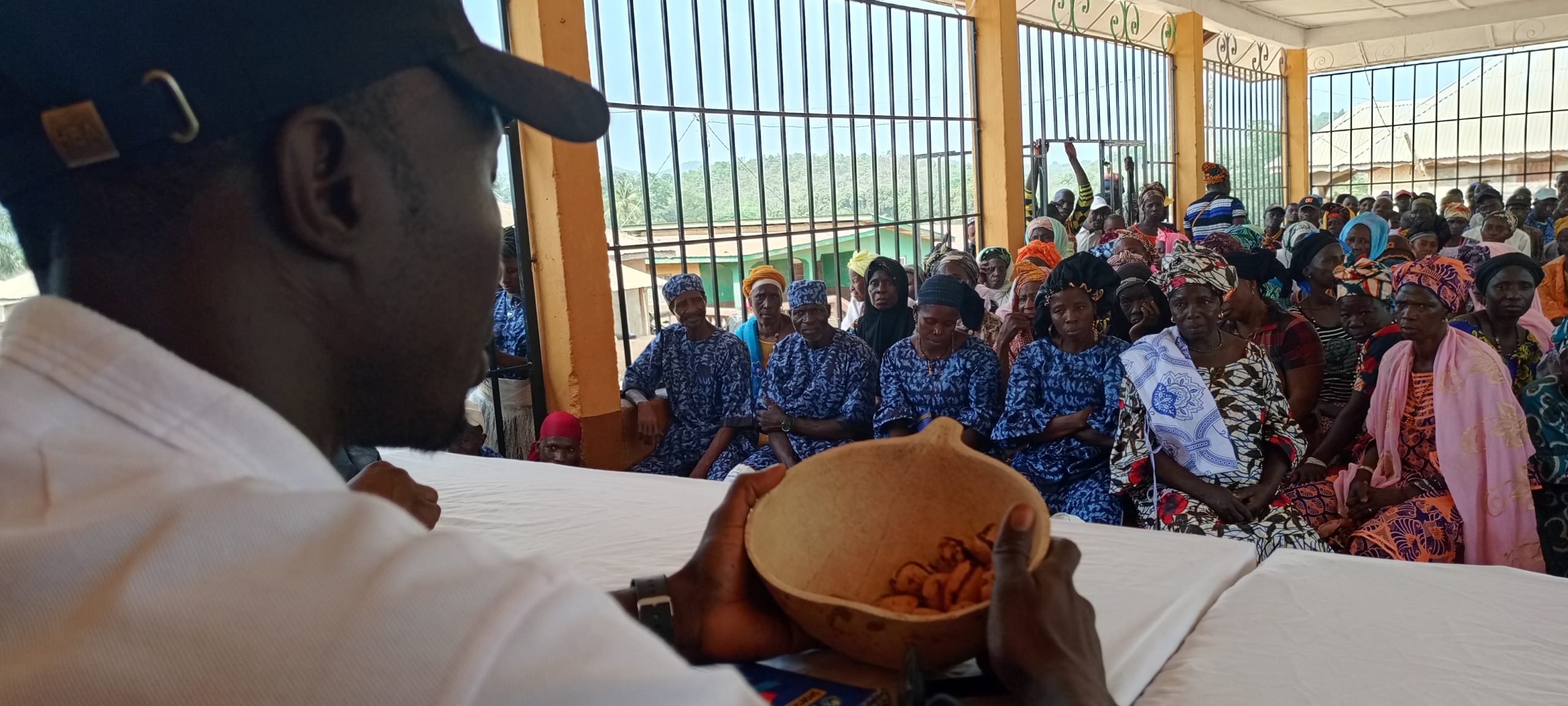
Community leaders, parents, and Mothers’ Club members gathered in Falaba District to affirm their support for the Village Learning Center initiative, where the Paramount Chief honored the occasion with a traditional cola nut ceremony symbolizing hospitality, respect, and commitment to partnership.
Through community engagement and the creation of Mothers’ Clubs, families became active partners in education rather than bystanders to it. Mothers became advocates. Communities became protectors of the learning spaces that had taken root among them.
From project to movement
What began as a series of interventions gradually became something more durable. Together with CAUSE Canada and 60 million girls, Samuel helped establish Village Learning Centers across Koinadugu, Falaba, and the region of Kabala — solar-powered, digitally equipped spaces built and maintained in partnership with local leadership. Teachers were trained to integrate technology into their practice. School leadership was strengthened. And the model, designed from the start to be self-sustaining, continued to grow long after the initial project phases ended.
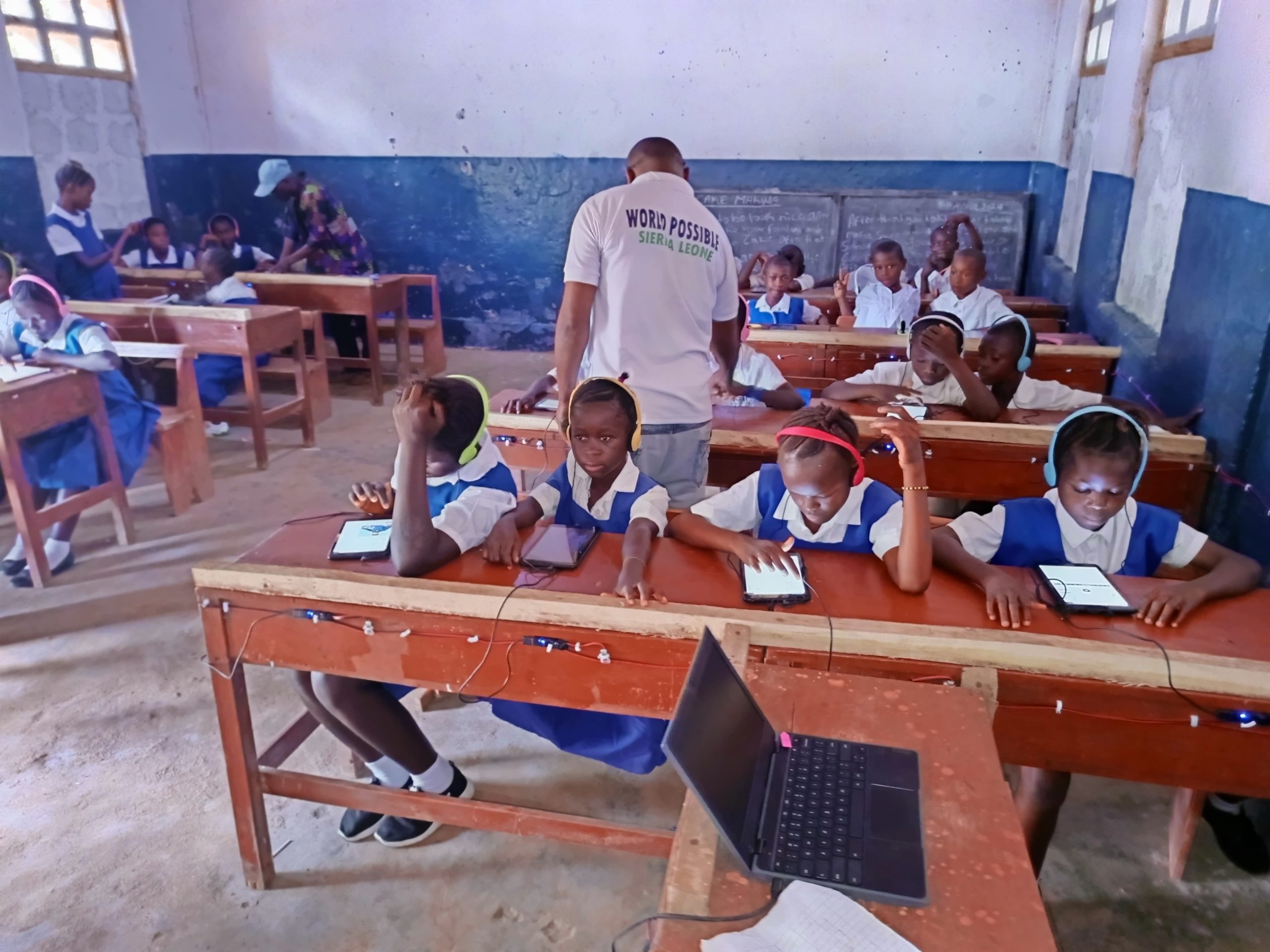
Kids working with the RACHEL
Samuel is candid about the obstacles along the way — the difficult roads, the limited infrastructure, the resource constraints that required constant creativity. But he is equally clear about what kept him going. “Behind every obstacle was a child waiting to learn,” he says. “Every challenge only strengthened our commitment.”
There are moments from those years he says he will never forget: a young girl solving her first math problem on a digital platform; a teacher saying, “This has forever changed how I teach”; communities coming together to build and protect their own learning spaces.
As 60 million girls marks its 20th anniversary, Samuel reflects on what two decades of this work actually means. “Twenty years is not just a measure of time,” he says. “It is a testimony of purpose, resilience, and impact.” And he is quick to note that the work is far from finished. Millions of girls are still waiting for access, still waiting for opportunity, still waiting for someone to believe in them. “I believe,” he says simply, “that we are that someone.”
Moved by Samuel’s story? Behind every Village Learning Center is a network of partners, donors, and believers who made it possible. If you’d like to help bring quality education to more girls in rural Sierra Leone and beyond, consider supporting the 60 million girls Foundation at 60millionsgirls.org.