Digital STEM and Climate Resilience Initiative for Rural Senior Secondary Schools (D-STEMMER Initiative) – Uganda
Partner: The Stephen Lewis Foundations
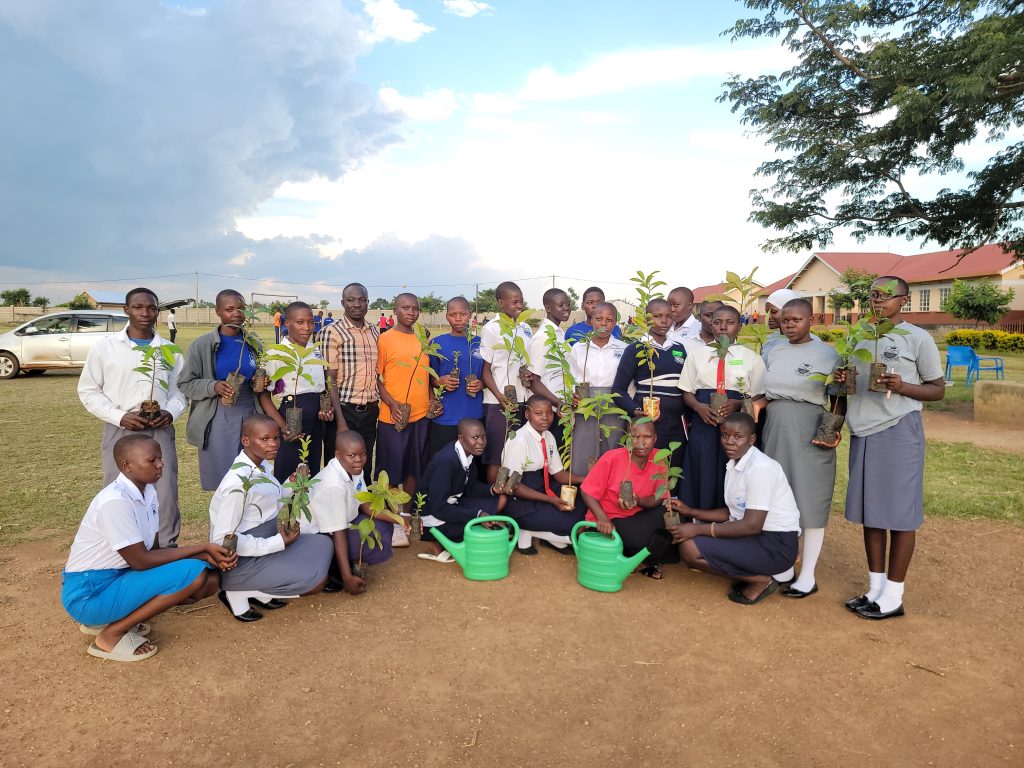
Eco-Club members at the Namutumba Seed Secondary school hold fruit seedlings ready for planting as part of their climate action initiative. The seedlings will provide food and shade for the school community for years to come. Photo courtesy of BIDCAF
Background:
The D-STEMMER Initiative is a targeted education and climate action project designed to address educational inequality and climate vulnerability in the rural districts of Luuka and Namutumba in Uganda’s Busoga sub-region. Grounded in a gender-sensitive and environmentally responsible approach, this initiative addresses the structural, gendered, and environmental barriers that prevent girls from completing secondary education or pursuing STEM pathways.
The D-STEMMER Initiative uses practical, innovative approaches to transform STEM and climate education. It operates as an integrated system that positions girls as active leaders and co-creators. Students also engage in locally relevant climate projects, where they research real community challenges and present solutions to local leaders. Through a student-led research-to-advocacy pathway, learners generate data, influence community decisions, and drive real-world solutions. Through hands-on learning, peer collaboration, and community engagement, the project creates practical, scalable solutions. In addition, the MLL provides a fully offline digital learning system, ensuring all students can access high-quality resources.
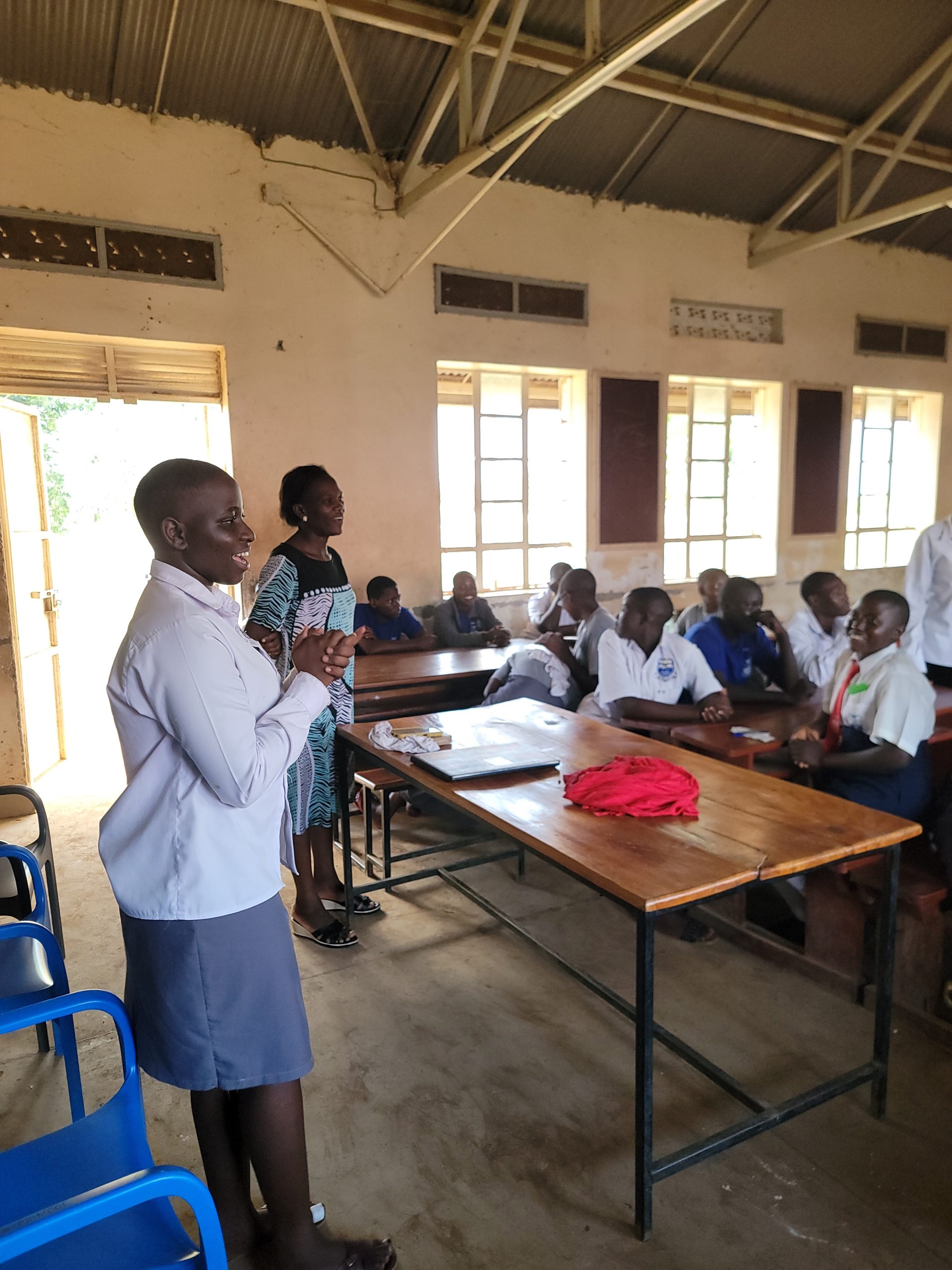
The democratically elected Eco-Club Chairperson addresses club members during a leadership meeting. Photo courtesy of BIDCAF
This project positions girls not only as beneficiaries of improved education, but as leaders and innovators shaping a more sustainable and equitable future for their communities.
60 million girls will be investing $200,000 in this transformative project
Project Objectives
Primary beneficiaries include 3,000 secondary students (1,500 girls) in Luuka and Namutumba. Within this group, 750 girls will take on leadership roles in Eco-STEM Clubs as peer educators and innovators addressing local environmental challenges.
Secondary beneficiaries include 30 teachers and administrators who will strengthen their capacity in climate-smart STEM education through training in gender-responsive digital facilitation and teaching methods. Approximately 2,000 community members will also be engaged through dialogues and student-led demonstrations to promote youth-informed, gender-responsive STEM delivery and inclusive climate policy.
This project is transforming how girls access and experience STEM learning. Our partner will establish 10 Mobile Learning Labs (MLLs) within selected rural secondary schools while embedding climate-responsive education into everyday learning. Each MLL will be preloaded with Uganda’s National Curriculum Development Centre (NCDC); an accredited digital STEM curriculum for Senior 1–4. Interactive simulations, virtual science experiments, and video tutorials will also allow girls to engage in hands-on, practical learning.
Climate education is embedded as an applied framework that connects learning directly to community realities. To further support academic advancement and leadership development, girls will participate in school-based Eco-STEM Clubs. Through the MLLs, students will engage with modules on soil health, agroecology, renewable energy, and climate adaptation, while Eco-STEM Clubs translate this knowledge into practical solutions. Girls will lead initiatives such as testing soil restoration techniques, producing clean biofuel briquettes, and designing energy-efficient cookstoves, addressing local environmental challenges, while reducing household labor burdens. By positioning girls as knowledge holders and innovators, the project strengthens their academic engagement and demonstrates the tangible value of their education to families and communities. Climate literacy modules further equip girls to analyze environmental risks, interpret local data, and communicate adaptation strategies, positioning them as knowledge holders and agents of change.
Students will have access to high-quality STEM and climate education through the MLLs embedded in school. Teachers will continue using improved, gender-responsive teaching methods, while girls through Eco-STEM Clubs, will build confidence, leadership skills, and stronger engagement in STEM subjects. Students will apply what they learn through climate action projects, developing practical problem-solving skills and contributing to their communities.
In the long term, the project will support broader improvements in education systems by offering a model that can be expanded across districts. It will help create a generation of girls, with strong STEM skills, confidence, and climate awareness. This will lead to better educational outcomes, increased opportunities for girls, and stronger community resilience through locally driven climate solutions. Broader impacts include strengthened community resilience, economic opportunities linked to applied skills, and intergenerational benefits as learners carry forward values of education, climate action, sustainability, and problem-solving into their futures.
Why partner with the Stephen Lewis Foundation:
The Stephen Lewis Foundation has been a valuable and important partner to 60 million girls since 2006. We highly regard the SLF’s philosophy of working with local NGOs over long periods of time in a holistic approach: considering governance, stability and learning for their NGO partners as well as the understanding that community involvement and support is the foundation for any lasting change.
In the long term, the project will support broader improvements in education systems by offering a model that can be expanded across districts. It will help create a generation of girls, with strong STEM skills, confidence, and climate awareness. This will lead to better educational outcomes, increased opportunities for girls, and stronger community resilience through locally driven climate solutions. Broader impacts include strengthened community resilience, economic opportunities linked to applied skills, and intergenerational benefits as learners carry forward values of education, climate action, sustainability, and problem-solving into their futures.
We are thrilled to be working with the SLF once again.