Maximizing Opportunities for Better Information, Learning & Empowerment (MOBILE) in South Sudan
Partner: WUSC – World University Service of Canada
Background:
In South Sudan, girls face education barriers due to conflict, climate shocks, and restrictive gender norms. Lacking agency and quality Comprehensive Sexuality Education (CSE), many leave school early due to pregnancy, early marriage or poor learning conditions. Maximizing Opportunities for Better Information, Learning, and Empowerment (MOBILE) addresses these challenges by improving access to high quality, technology-enabled CSE and information that supports climate resilience.
The project will deploy accessible Mobile Learning Labs (MLLs) and integrate and adapt CSE and climate curricula through the Labs.
60 million girls will be investing $200,000 in this important project
Project objectives:
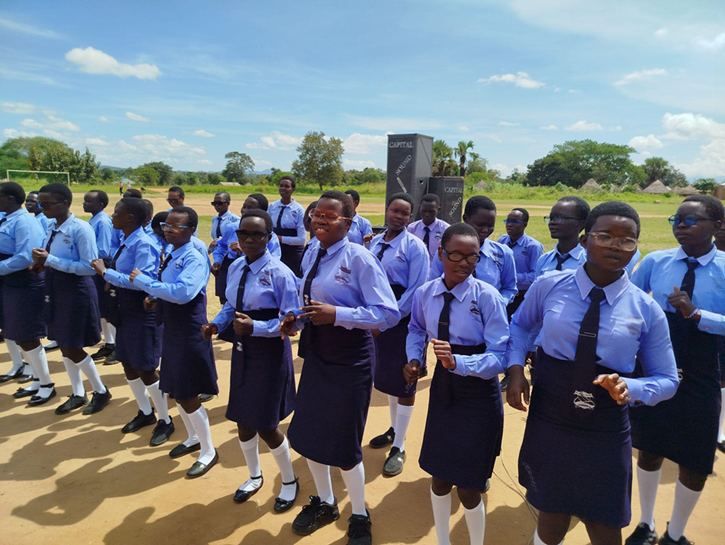
The project targets up to 3000 upper primary and secondary learners (aged 10–24) in select climate and conflict-affected communities in Yei, Magwi and Kajo Keji. At least 50% of participants will be girls.
This project is particularly innovative for the following reasons:
- Zero-Connectivity Delivery: Using offline-capable MLLs, MOBILE delivers quality education even when schools are without internet, making digital learning a bridge to equity.
- Climate-CSE Intersection: Content strengthens girls’ agency to navigate social pressures like early marriage and worsening environmental conditions.
- Income-Generating Potential: Leveraging solar charging infrastructure procured through MOBILE, schools generate revenue through mobile-charging services for community members to cover long-term maintenance, a proven model in South Sudan.
Training and coaching for educators will ensure they have digital/operational skills and knowledge to effectively use 5 new MLLs and empower girls to navigate risks, stay in school, and build resilience. Community leaders and caregivers will be engaged through dialogue circles to build a protective environment for girls’ learning.
In the medium term, the project expects improved retention for adolescent learners (particularly girls) through improved CSE and climate-related competencies, measurable shifts in community support for CSE as resistance transitions to advocacy and increased digital literacy and confidence for learners and teachers.
Why partner with WUSC:
WUSC has extensive global experience leading girls’ education projects including 10+ years in South Sudan. 60 million girls has partnered with WUSC on a number of projects in refugee camps in Africa with truly great impact on girls’ education. This will be WUSC’s first time implementing MLLs in this vulnerable context.
In the long term this project is expected to provide actionable insights into tech-enabled delivery to inform national education strategies. Findings will guide policy dialogues with the Ministry of General Education and Instruction of South Sudan and education partners.
We are thrilled to be partnering with WUSC on this important project that will further show the positive impacts of the use of technology not only for academic content but for CSE, life skills and relevant climate action knowledge.